Best Apps to Split Travel Expenses
Handle group travel costs with clearer rules, fair splits, and a shared system for tracking who pays for what.

Louis Bloom
Author
The Tool Fit Problem
Choosing an expense splitting app is not about collecting features. It is about solving a specific bottleneck in your travel planning workflow. Some groups need simple bill splitting at restaurants. Others need complex multi-currency tracking across week-long trips. The wrong tool creates friction; the right tool disappears into the background. ### The Real Bottlenecks Travel expense splitting breaks down in predictable ways. Someone pays for the group dinner and forgets to log it. A hotel gets booked on one card but everyone needs to pay their share. Different currencies create confusion about who owes what. Someone backs out after deposits are paid. These are the problems that matter. ### Feature vs Fit Most app comparisons list features—receipt scanning, payment integration, group chat. But features do not matter if they do not solve your specific problem. A receipt scanner is useless if your group never keeps receipts. Payment integration is irrelevant if everyone prefers settling in cash. The right app fits your group's behavior, not the other way around. ### The Comparison Framework This comparison evaluates apps against real travel scenarios. Which handles uneven splits gracefully? Which works offline in foreign countries? Which keeps everyone honest without constant nagging? The goal is finding the tool that matches how your group actually travels. A page like [expense splitting](/features/expense-splitting) helps when you want location-specific context before finalizing plans.
Splitwise: The Universal Standard
Splitwise has become the default for good reason. It handles the basics exceptionally well. ### What It Does Best Uneven splits are Splitwise's strength. One person had two drinks, another had none. The app calculates exactly who owes what without mental math. It tracks debts over time, so you do not settle after every meal. The running balance shows who is ahead and who is behind. ### Where It Falls Short Splitwise is purely reactive. You log expenses after they happen. It does not help with upfront budgeting or preventing overspending. The interface can feel cluttered for simple trips. Groups that want proactive budget management outgrow it quickly. ### Best For Groups that split costs unevenly and settle debts periodically rather than immediately. Friends who trust each other to log expenses honestly. Trips where the goal is fair division, not tight budget control. If logistics are getting messy, [How to Split Travel Expenses With Friends](/blog/how-to-split-travel-expenses-with-friends) is worth using early.
Venmo: The Immediate Settlement
Venmo dominates peer-to-peer payments in the United States. It is fast, familiar, and frictionless. ### What It Does Best Immediate payment is Venmo's superpower. Someone pays the bill, everyone else sends money within seconds. No tracking, no running balances, no debt accumulation. The social feed creates mild accountability—everyone sees who paid whom. ### Where It Falls Short Venmo has no expense tracking. You cannot see what the group spent total, or who paid for what. International trips are problematic; Venmo only works with US bank accounts. The social feed annoys people who prefer financial privacy. ### Best For Domestic trips with even splits and groups that settle immediately. Groups that already use Venmo for everything else. Trips where simplicity matters more than detailed tracking. For a related angle, [How to Split Hotel Costs With Friends Fairly](/blog/how-to-split-hotel-costs-with-friends) is a useful follow-up read.
Packed: The Integrated Approach
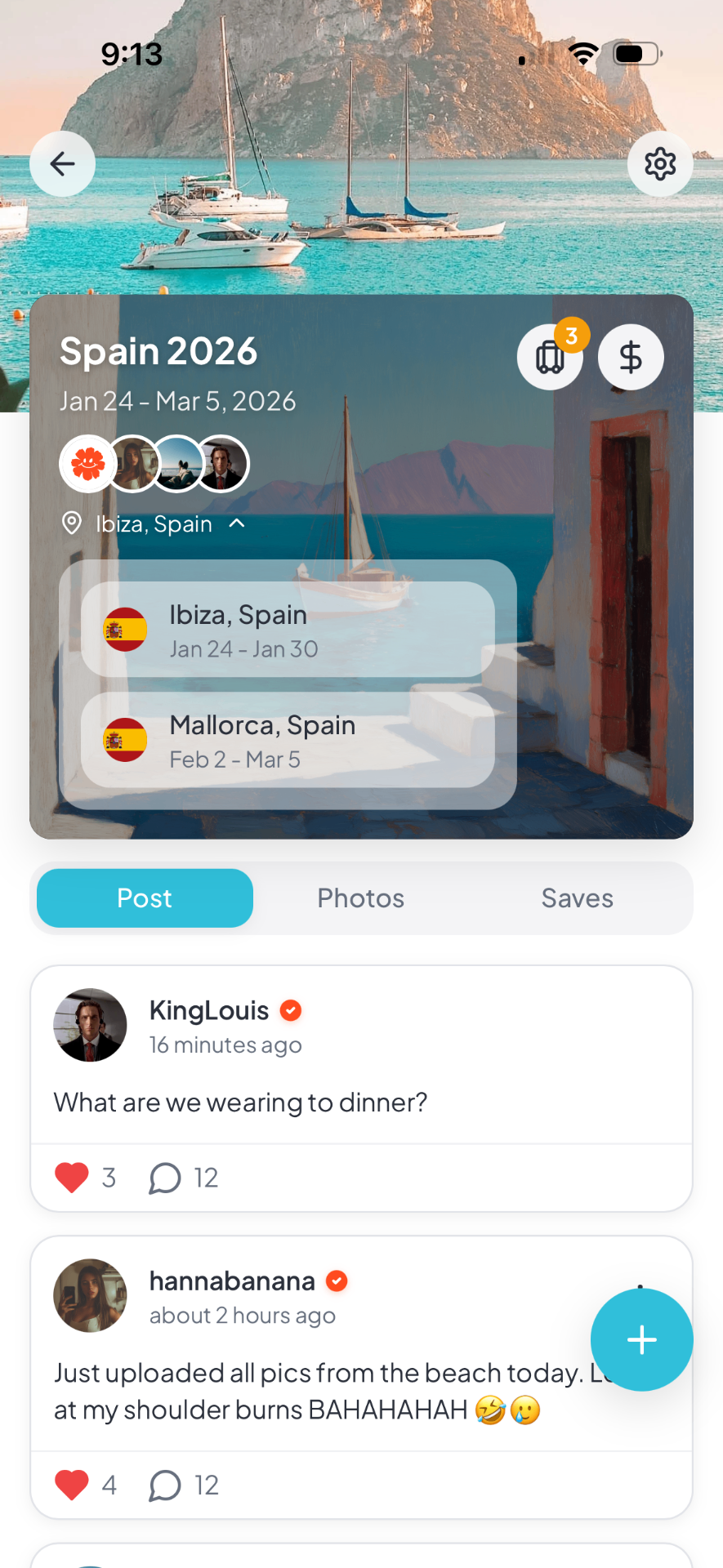
Packed combines expense splitting with broader trip planning, which changes how groups manage money. ### What It Does Best Context is Packed's advantage. Expenses live inside the trip, alongside the itinerary, saved places, and group chat. When someone logs a dinner expense, everyone sees it in the same place they are planning tomorrow's activities. The [expense splitting](/features/expense-splitting) feature handles uneven splits and tracks who has paid what in real time. ### Where It Falls Short Packed requires everyone to use the same platform. If your group is scattered across different apps, migration takes effort. The expense features are robust but not as specialized as dedicated finance apps for complex scenarios. ### Best For Groups that want expenses integrated with the rest of their trip planning. Friends who value having everything in one place over using the most specialized tool for each task. Trips where coordination matters as much as cost tracking.
Tricount: The Simple European Option
Tricount built its reputation on simplicity and international compatibility. ### What It Does Best Multi-currency support works seamlessly. The app converts expenses to everyone's home currency automatically. The interface is clean and unintimidating for non-technical users. It works offline, syncing when connectivity returns. ### Where It Falls Short Tricount is deliberately basic. No receipt photos, no payment integration, no advanced features. Groups outgrow it as their needs become more complex. The settlement suggestions can be confusing when multiple currencies are involved. ### Best For International trips with mixed currencies. Groups that want simplicity over features. Travelers who need offline functionality in areas with poor connectivity.
Settle Up: The Visual Approach
Settle Up focuses on making expense division visually clear and intuitive. ### What It Does Best Visual breakdowns show exactly how debts flow between group members. The interface makes it obvious why you owe what you owe. Receipt photos attach to expenses for documentation. The app suggests optimal payment paths to minimize transactions. ### Where It Falls Short The visual approach works for small groups but becomes overwhelming with larger parties. The app lacks the ecosystem and reliability of more established competitors. Some users find the interface too playful for serious expense tracking. ### Best For Visual learners who need to see how money flows. Small groups that want to minimize the number of payments needed to settle debts. Trips where documentation matters for reimbursement or tax purposes.
Choosing Your Tool
The right app depends on your group's specific bottlenecks. ### The Decision Matrix If your problem is uneven consumption—different drinking habits, varying activity participation—choose Splitwise. If your problem is immediate settlement and everyone uses US banks, choose Venmo. If your problem is coordination across planning, expenses, and activities, choose Packed. If your problem is multi-currency complexity, choose Tricount. ### The Migration Cost Switching tools mid-trip is disruptive. Choose before departure and stick with it. The best app is the one everyone will actually use, not the one with the most features. A simple tool used consistently beats a powerful tool ignored by half the group. ### The Integration Factor Consider what else you are using. If you are already using a [travel expense splitting](/blog/how-to-split-travel-expenses-with-friends) workflow alongside a separate planning app, the integration benefits of an all-in-one platform may not matter. If you are juggling five different tools, consolidation becomes valuable.
Plan your next trip with Packed
Group itineraries, expense splitting, and 700K+ places to discover in one app.